
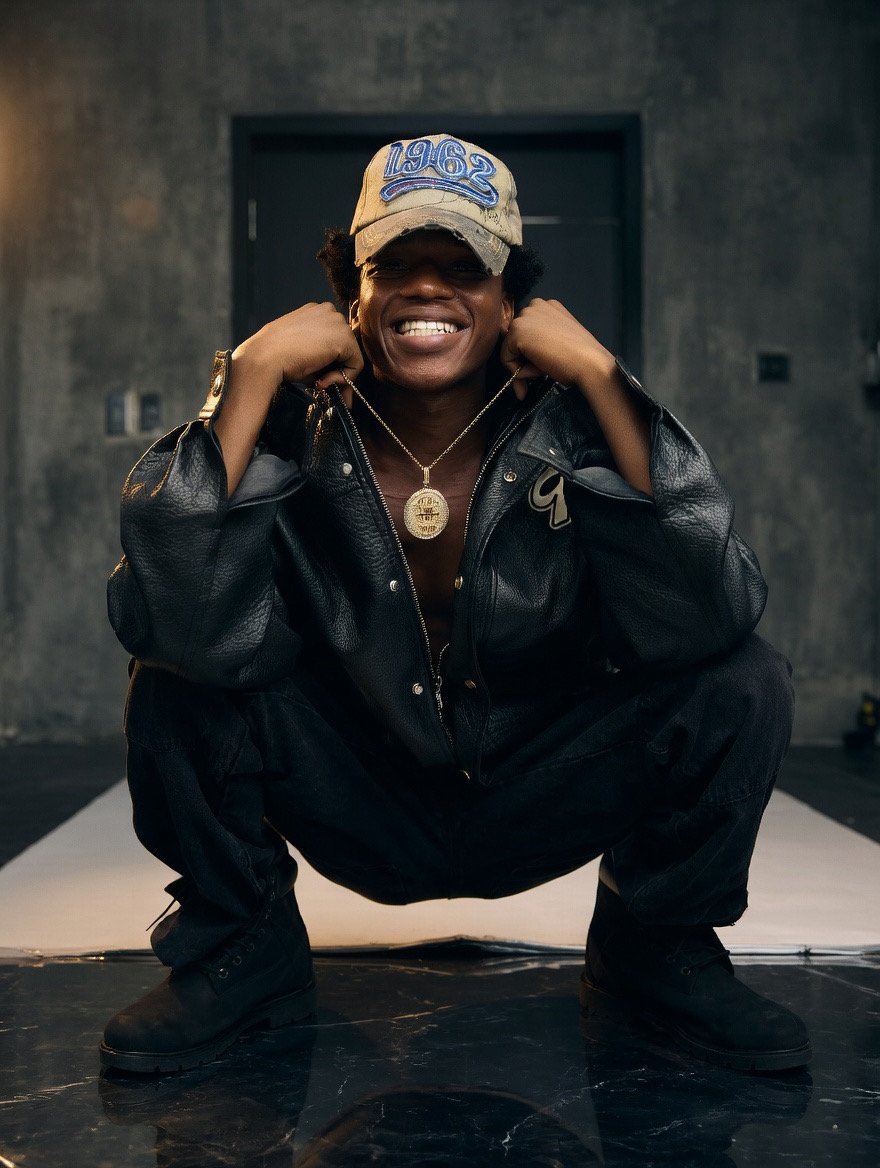
At just 18, OmaYe is already making the kind of noise that demands attention. Emerging from Abuja, Nigeria, the young artist is carving out a distinct space between the infectious movement of Afrobeats and the sharper edge of hip-hop, bringing together a sound that feels connected to where he comes from while reaching naturally beyond it.
Born on April 8, 2008, OmaYe represents a new generation of African artists growing up with a global audience within reach. His music carries the energy of Abuja’s streets, but his ambitions extend far beyond the city. Rather than attempting to fit neatly into one category, he is building his identity around rhythm, attitude and an instinct for records that can travel.
His early introduction to audiences came through the EP 17een, laying the groundwork for what would follow. Then came “Seven P,” the Afrobeats single that began turning local momentum into measurable attention. The track found its way onto radio and into clubs while gaining traction across digital platforms, surpassing 100,000 combined streams on Audiomack, Apple Music and Spotify.
But for OmaYe, “Seven P” was only the beginning.
From Abuja Buzz to a Bigger Conversation
The release of his debut album, Street Laws, pushed his name into a much wider conversation. The project has attracted listeners internationally and helped establish OmaYe as one of the emerging names within the new wave of African pop and hip-hop.
What makes the moment particularly significant is the distance OmaYe has traveled in a relatively short period of time. His story is no longer limited to the Abuja scene. Coverage from publications in the United States, Germany, Nigeria and the United Kingdom has introduced his music to audiences across different markets, giving his rapidly developing career an increasingly international dimension.
At the center of it all is Street Laws, a project that reflects an artist beginning to define himself on his own terms.

There is a certain confidence in that progression. OmaYe is young, but his music is already being heard outside the environment that shaped him. Abuja remains an important part of his identity, yet Street Laws suggests that he is interested in what happens when that identity meets the wider world.
Building a Sound That Can Travel
Signed to Lucky Lisiano Records, OmaYe has surrounded his developing sound with a growing network of producers and collaborators. His work with producers PTD, Xavi, Choice D, MC Sameerah and Strings2Mental has helped shape the musical landscape behind his releases, while collaborations with Emir Makhanaki and Stardon Globe have added further dimensions to his catalogue.
His music has also received support from DJs including DJ Ivan in Kenya and DJ Khalifa in Abuja, extending the reach of his records through the people who help move music from speakers into real-world spaces.

That connection between the music and its audience is important to OmaYe’s story. His rise has not been built around one moment alone, but through a series of releases, collaborations, streams, performances and growing recognition that continue to widen his audience.
A New Generation With Its Own Rules
There is something fitting about an artist this young naming his debut album Street Laws. The title carries a sense of environment, experience and self-definition, but it also reflects where OmaYe appears to be in his career: learning the landscape while refusing to be limited by it.
At 18, there is still plenty of road ahead. What has already happened, however, provides a clear indication of the direction he is taking. From 17een to “Seven P” and now Street Laws, each release has marked another step away from being a promising young artist in Abuja and toward becoming a name with international ambitions.
OmaYe is not presenting Abuja as a limitation. He is carrying its energy with him.
With Street Laws now out in the world, the next chapter is about seeing how far those records can travel — and how much further an 18-year-old artist with a growing audience can take the sound he is building.
OmaYe is young, but the rules are already his to write.